Beyond Oil: How the Iran War Is Repricing Global Food Systems
While energy markets dominate headlines, a quieter but potentially more destabilizing crisis is unfolding beneath the surface: the financial disruption of global food systems and fertilizer supply. At the centre of this dynamic lies global shipping. At AFC, we view this not as a short-term disruption, but as a structural pressure building beneath the surface of global markets.
How Geopolitical Tensions Are Disrupting Global Food Systems
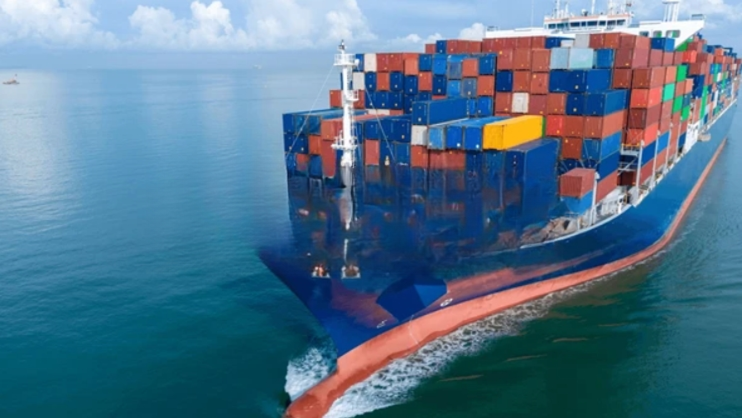
Strategic waterways such as the Strait of Hormuz and Red Sea routes are not only vital for oil flows but also for agricultural inputs. Fertilizers, particularly nitrogen-based products, are highly energy-intensive and deeply dependent on natural gas both as a feedstock and a cost driver.
As a result, fertilizer pricing behaves less like a traditional commodity and more like a leveraged derivative of energy markets. Roughly 30% of globally traded fertilizer transits through Hormuz-linked routes.
Fertilizer Prices: The Critical Link Between Energy and Agriculture
Any disruption introduces immediate logistical bottlenecks and, more importantly, risk into futures markets. Shipping insurance costs rise, freight rates spike, and suppliers begin pricing in scarcity before it physically materializes. This forward-pricing mechanism transmits shocks rapidly across global agricultural markets.
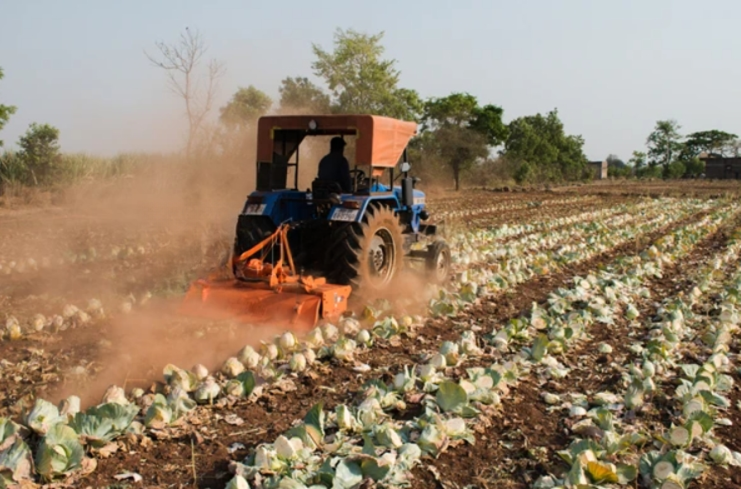
The consequences for farmers are both financial and operational. Fertilizer costs can represent between 30% and 50% of total input expenses depending on the crop and region. As prices rise, producers face a margin squeeze that forces difficult decisions: reduce application rates, delay planting, or shift to less input-intensive crops. Each of these choices carries a direct impact on yields and, ultimately, global supply.

Rising Costs, Lower Yields: The Growing Pressure on Farmers
Unlike the immediate shock witnessed during the Russia-Ukraine war, where wheat and corn prices surged sharply, the current crisis is more sneaky. It is not yet fully reflected in spot food prices but is building within cost structures, balance sheets, and forward contracts. Energy remains the key transmission channel. Natural gas prices feed directly into ammonia and urea production, meaning any sustained increase in gas prices mechanically elevates fertilizer costs. In financial terms, agriculture is experiencing a cost-push inflation cycle, where upstream energy shocks cascade downstream into food production.
At the same time, global agricultural markets are becoming increasingly financialised. Hedge funds, commodity trading houses, and institutional investors are actively positioning in agricultural futures, amplifying price volatility. As uncertainty rises, speculative positioning can widen price swings beyond what fundamentals alone would justify, further destabilizing input costs for producers. Critically, there is no safety net to absorb supply shocks.
Unlike oil markets, where strategic petroleum reserves provide a degree of shock absorption, there are no equivalent global reserves for fertilizers. This absence creates a structural asymmetry: supply shocks cannot be smoothed, only endured. Timing compounds the risk.
Across the Northern Hemisphere and key regions in South Asia, planting seasons are already underway. Fertilizer application follows strict biological timelines; missed windows cannot be recovered through later intervention. This introduces a lagged supply shock, where the impact of today’s disruptions will only fully materialize at harvest, embedding future price increases into the system. Early signals are already visible in humanitarian logistics. Food aid shipments are delayed or stranded due to disrupted routes and elevated transport costs. Simultaneously, global aid budgets are tightening, reducing elasticity in response capacity. In economic terms, both supply and relief mechanisms are constrained simultaneously, increasing systemic vulnerability.
Market Impact: Food Inflation, Volatility, and Global Risk Exposure
From a market perspective, this environment is likely to sustain upward pressure across multiple asset classes:
- Agricultural commodities (wheat, corn, soybeans) face tightening supply expectations.
- Fertilizer producers benefit from pricing power but remain exposed to energy volatility.
- Energy markets, particularly natural gas, continue to act as the primary upstream driver.
- Emerging markets, heavily reliant on food imports, face deteriorating trade balances and rising sovereign risk.
Over the longer term, structural solutions exist but require capital, coordination, and time. Investments in soil regeneration, alternative fertilizers, and localized production can reduce dependency on global supply chains. However, these are multi-year adjustments, not immediate fixes. The broader implication is clear: food security has become a financial and geopolitical variable, not merely an agricultural one. It now sits at the intersection of energy pricing, trade logistics, and capital flows.
As these pressures converge, the risk of a global food crisis shifts from theoretical to tangible. Without coordinated intervention, both at the policy and market level, the world may once again be reminded that in the hierarchy of crises, food is never far downstream from war.”
At AFC, we advise our clients to not overreact, but to understand the underlying transmission mechanisms, because in this cycle, the most significant impacts are likely to emerge with a delay, not immediately.
Source: AFC Advisory & Asset Management Department